background


Wednesday, April 17, 2013

70 Days...

The countdown is on...

In case you don't know, that means that we are only 70 days from Tucker's 3rd open-heart surgery. 

Back in March 2010, when Tucker had his 2nd surgery, this 3rd procedure seemed so far away. Now we are just over 2 months away. He will have his pre-op heart cath on May 22nd. During the heart cath they will check his heart and the pressures in his blood vessels to make sure that his body is in good shape for surgery. They will also look at the anatomy of his heart to begin to plan for the procedure. The heart cath is a fairly simple experience and he shouldn't have to stay in the hospital overnight afterwards.

On June 17th we will go to the hospital for his pre-op physical exam, bloodwork, and meeting with Dr. Mendeloff, the surgeon. Tucker will also get to spend some time with the child-life specialist where she will explain the surgery to him and let him pretend/play in the mock operating room. Dr. Mendeloff will walk us through the surgery and answer our questions. Pre-op days can be very long, but it is necessary.

The next day, June 18th, we will hand Tucker over to Dr. Mendeloff for the 3rd time in his short life. He will stop Tucker's heart and complete the "repair". The 3rd procedure, the Fontan, involves completing the re-routing of Tucker's heart circulation to eliminate the mixing of oxygenated and deoxygenated blood. The recovery time can be a week or two or several months, this all depends on Tucker. We are already praying for God's blessing on this surgery and Tucker's healing.

So, 70 days...it will be here in no time at all!

The heavy stuff aside, I wanted to share a few things that have happened for us since my last post (which has been too long).

Finn is now 11 months old and growing and learning quickly. He is now crawling and cruising around the house pretty well. He also got tubes in his ears last month after too many ear infections!

Tucker continues to surprise us daily with something new that he has learned. He is very bright and after being tested by special education diagnosticians, has been deemed ahead in many areas, academically. We had him tested because we had observed some possible speech issues and also to establish a baseline for his cognitive levels in case there were complications with his surgery.

We had a great trip to the wildlife preserve in Glen Rose, Texas for Spring Break and also got to spend time with our family for Easter.

I'm sorry if this seems like scattered/rushed post, but its just what was on my mind tonight. Enjoy some pictures and video of the boys.


Wagon time

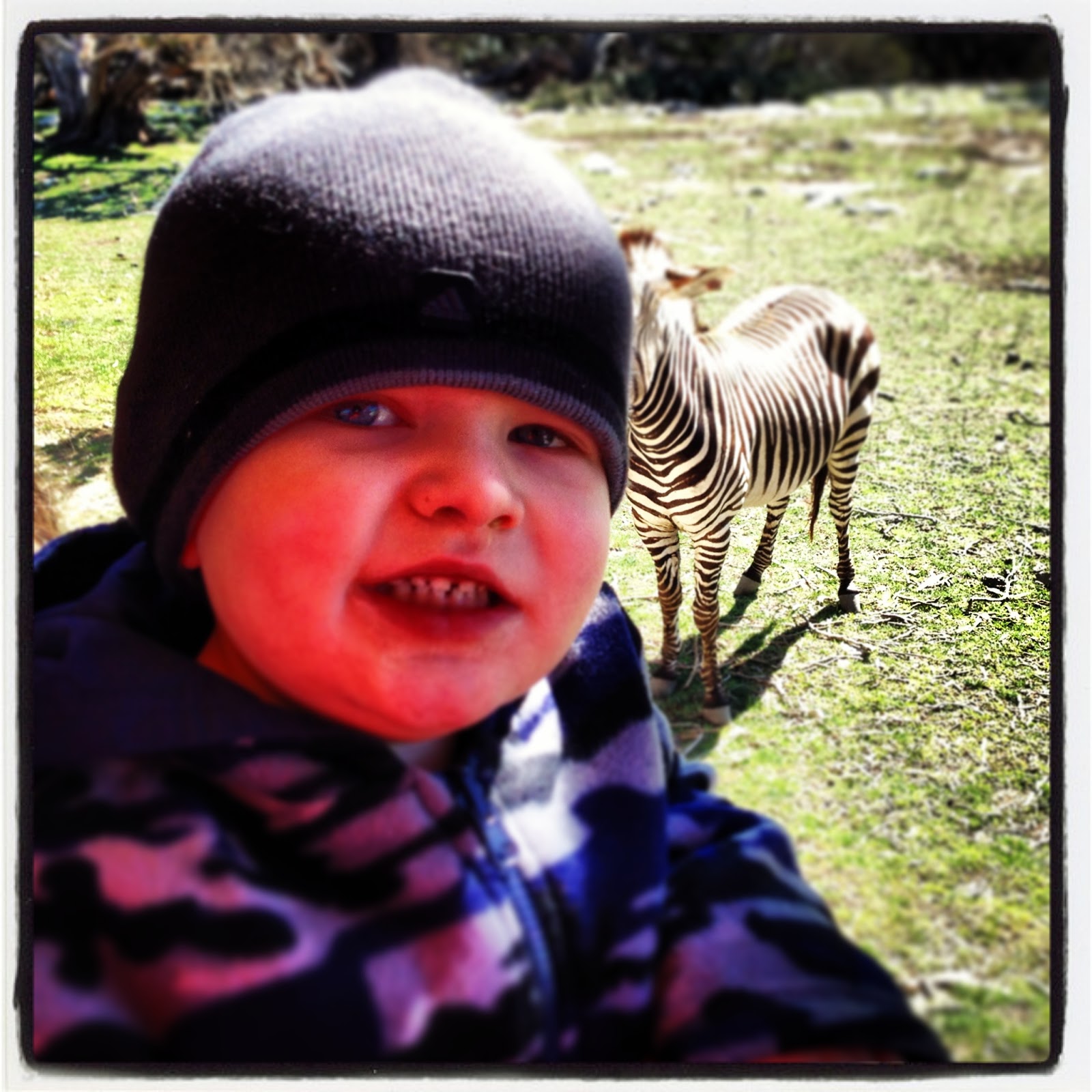
Tucker with his friend the zebra

Tucker - 10 months old                     Finn - 9 months old

Brotherly love!

Tuck & Finn - Easter 2013

Maddie, Tucker, Beckett, & Finn - Cousins

Tucker picking up his NASCAR tickets

Tucker's 1st NASCAR race

Ready to roll

Smiley!

Balloon boy

Crusing


Saturday, January 19, 2013

Wishes for CHD Kids

Make a Wish Logo
Did you know that most CHD kids qualify for the Make-A-Wish program? If you didn’t know that, you are not alone!
Our local support group, Amazing Little Hearts, had a representative from Make-A-Wish at our meeting this past week. He shared about the program and answered all of the parents’ questions. Since not everyone is familiar with the program, I wanted to share what we learned with you. Hopefully, the information below will help you understand Make-A-Wish a little better and answer any questions that you might have.
  • Any child between the ages of 2 ½ years and 18 years, that has a life-threatening condition, is eligible for Make-A-Wish. Children must be referred and determined to be medically eligible in order to participate. The final determination for medical eligibility is determined by the child’s treating physician.
  • Most complex CHDs qualify as a life-threatening condition. These include, but are not limited to, Hypoplastic Left/Right Heart Syndrome, Double Inlet/Outlet Left/Right Ventricle,Transposition of the Great ArteriesTetralogy of FallotPulmonary Atresia, etc. If you aren’t sure if your child’s CHD qualifies, consult your pediatric cardiologist.
  • Referrals for Make-A-Wish can be made by parents, doctors, nurses, and even social workers. Basically, anyone who has direct knowledge of the child’s condition and has a role in the medical care for the child can refer. MOST referrals are made by the child’s parent, but medical eligibility still must be confirmed by the child’s doctor.
  • To refer your child, go to www.wish.org and click on the “Find Your Local Chapter” button on the top, right side of the page. Select your state and then find the office that is closest to your home from the list. Call the number and they will walk you through the referral process. You can also have them send you a referral packet in the mail, but the quickest and easiest way to refer your child is over the phone.
  • Some of the information that they will need from you during the referral process is: Personal contact information for parents/guardians, contact information for the child’s treating physician (usually cardiologist for CHD children), general information about the child’s condition or defect, information on any upcoming surgeries or treatments, any physical limitations, handicaps, or special equipment for the child, and an idea of what the child’s wish might be.
  • Despite what you might have heard, Make-A-Wish is NOT just for kids who are terminally ill. While children who are terminally ill may receive expedited services from Make-A-Wish, your child does not have to be dying to be able to make a wish. Remember, ANY child with a condition that has or does threaten their life is eligible for a wish. In fact, most children who are granted a wish go on to live happy, full lives.
  • Most wishes fall into one of four categories: “I want to be…”, “I want to go…”, “I want to have…”, “I want to meet…”
  • The average cost of a wish is $7,500. It is the goal of Make-A-Wish for a child’s wish to cost the family nothing and to have zero impact on the financial situation of the family.
  • Make-A-Wish goes to great lengths to ensure that the wish that is granted is actually the wish of the child. They will have trained Wish-Granters meet with the child and ask, “If you could have one wish, what would it be?”
On a personal note, we got some great news last week. Our son Tucker, HLHS, has been accepted into the Make-A-Wish program. We are so excited for him, but also realize that we will be waiting for a little while for him to make his wish. Since Tucker is only 3 and he has his Fontan procedure coming up in June, it may be a couple of years before we meet with the wonderful Wish Granters. We want him to be able to truly pick something special for himself since this is a once in a lifetime experience. We also want him to remember his wish for the rest of his life. We believe that, in order to accomplish these two things, Tucker needs to be at least 5 years old before he makes his wish.
Make a Wish acceptance letter
I hope that this information  has been helpful to you. Our CHD children go through so many tough times, they deserve the hope, wonder, and magic that comes with being granted a wish. I hope that you will take the time to refer your child to Make-A-Wish and that you will share this information with a friend who has a CHD child or any other life-threatening condition.

~Trent

Sunday, November 18, 2012

Hope Made of Glass


I've decided to start re-posting blogs that I have written for other sites here, in case someone happens to stumble upon them. Below is one I wrote for Whole Hearts last month.

My family participates in the CHD support group at Medical City Children’s Hospital, called Amazing Little Hearts. Our group meets each month to share stories, hear doctors and others speak about CHD topics, fellowship, and support each other. Occasionally, we have an outside group come and speak to us about programs or special opportunities for our families.

Not too long after Tucker went home from the hospital for the first time, we attended a meeting that had one of these special guests. Two sweet ladies came to speak to us about a new program that was beginning at the hospital. These ladies shared the story and inspiration behind the Beads of Courage program.

If you aren’t familiar with Beads of Courage, here is an excerpt from their website:”The Program is a resilience-based intervention designed to support and strengthen children and families coping with serious illness. Through the program children tell their story using colorful beads as meaningful symbols of courage that commemorate milestones they have achieved along their unique treatment path.” Basically, kids earn beads for each test, surgery, procedure, needle stick, treatment, etc. and the beads are strung on a necklace for the child to wear as a testament to their courage and resilience.

Beads of Courage supports kids with cancer and blood disorders, cardiac conditions, burn injuries, Neonatal ICU stays, and other chronic illnesses. Each of these conditions has its own specific program guide that fits the treatment cycle of the condition.

Beads of Courage is now in over 140 different children’s hospitals in the United States, Canada, New Zealand, Japan, and the United Kingdom. Over 30,000 children are benefiting from this amazing program, with more being added each day. 

Since Tucker is only 3 years old, he doesn’t really understand his beads yet, but he definitely loves them and likes to look at them. The older kids in our support group do understand the beads and know that they represent needle sticks, procedures, and the pain that is associated with CHD. Despite the fact that the beads represent “bad” things, the kids love them and wear them like a badge of honor. They know that they earned those beads with their bravery.

Our kids go through so much in their fight with CHD, it is important to reward them when the days are tough. Beads of Courage is a perfect way to provide hope and comfort, even when it seems like the fight is just beginning. The beads also provide a tangible way for each child or family to their story.

Behind the program is a large group of donors and artisans who make the beads possible. Donors and organizations provide the funds to operate the program at local hospitals. There are scores of special beads that are made by skilled glass artisans. These special beads represent major milestones in a child’s treatment and are especially treasured items.

If your hospital doesn’t already have a Beads of Courage program, you can contact them through their website, http://www.beadsofcourage.org/, to find out how to get one started.

Just like Beads of Courage, Whole Hearts Foundation is trying to bring hope to the courageous kids and families battling against congenital heart defects. Our mission is to provide education, support, connections, and innovation to our families. Also, like Beads of Courage, Whole Hearts relies on the generosity of others to be able to reach these families. You can make a tax-deductible donation to Whole Hearts by going to http://www.wholehearts.org/HowtoDonate.aspx.

Each of Tucker’s beads tells a story. They tell a story of pain, surgery, and a broken heart, but they also tell a story of triumph, courage, hope! What is your child’s story? We would love to share it with the Whole Hearts family!